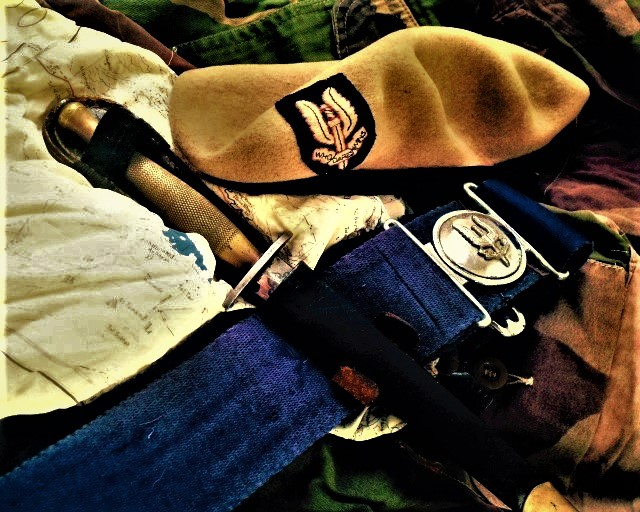
Beret, Regimental belt, escape map, and fighting knife.
Just where has the time gone?
As a young, fresh trooper joining B Squadron, I had the privilege to meet WW2 originals, including David Stirling. Served with Malaya and Borneo vets. Caught the last operational tour to the secret war in Dhofar (having already been twice with 2 Sqn, RAF Regt).
Picked the experienced brains of many, while being mentored by the very best.
Aimed high continuously, as that was what I was seeing around me day in and day out.
I would say that the average Trooper changes every 12-15 years…in my mind, that’s a good thing.
Looking at my own career, you can wear the beret and belt, but it takes years before you can call yourself an SAS soldier. I would say hand on heart that I was a sergeant, with a good handful of SAS and external courses behind me, and then put those skills into practice operationally, before I felt comfortable and proud to be an SAS soldier.
In my time of the Flintstone era, I would say around the 6 year period, as a mark of respect to those who got to that point, and given their operational experience, even back then…the man should have been able to wear his SAS wings on his chest, like those from WW2. I never spoke about it back then, and just maybe if I had, it would never have happened…but who knows? But it would probably have made for an interesting conversation amongst the senior ranks. In my view, it would have shown those of us who were young and super keen, that just by passing selection and going to a troop in a squadron, doesn’t make you an instant SAS soldier…it takes more than that…way more. With our wings on our right arm, and of course very proud, there is still a way to go. And seeing the more experienced lads with their wings on their chest, would have been another level to aim for.
Operational tours inside of 3 decades, the 70s, 80s and 90s. Many talked about, and written about, films having been made and documentaries…but also those finer operations that we don’t even talk about today…of which in my time there were many done by lads that we never hear about.
Thank you to the officers and men of 22 SAS for giving me the experience that at the tender age of 17, when I first saw the SAS on operations in Dhofar Province, Oman in 1972, I could only dream of.
Well, for almost 20 years, I was able to live that dream.
Thinking of all those young lads who are serving today. No matter how young you are, and no matter the cap badge or service (Army, Navy, Air Force), if you really want it, then it’s yours to go for.
 Bob Shepherd