
Those who know me well know that I’m Scottish and proud.
However, after running away from home at 14 years young, I found out at the age of 45 that I was adopted at birth.
I would spend years researching my real family after finding out my real name and who my real parents were.
Sadly both my real parents would be dead, my father only just when I found him through the funeral parlour’s website. Situated only just over 2 hours from where I was living at the time in England.
My mother’s side are Scottish through and through, all the way back to the late 1500s…as far as I could get with my research.
However, my father’s side is Irish from Donegal, although he and his dad were born in Scotland. But my father’s mother, my grandmother was born in Washington State in the USA, up near the Canadian border.
With the great help of a council researcher in Scotland, I was able to trace back my grandmother’s heritage.
Brown being a common name around the world, let alone in Scotland and even in the USA, led me up several blind alleys. I’d spend days tracing back to an obvious sound ancestry before heading forward once again, and again, and again…
Eventually, steaming away with the help of amazing family historical records here in the USA.
John Brown would be my 4x great uncle…the man who many claim to have started the American Civil War. His younger brother is my 4x great grandfather.
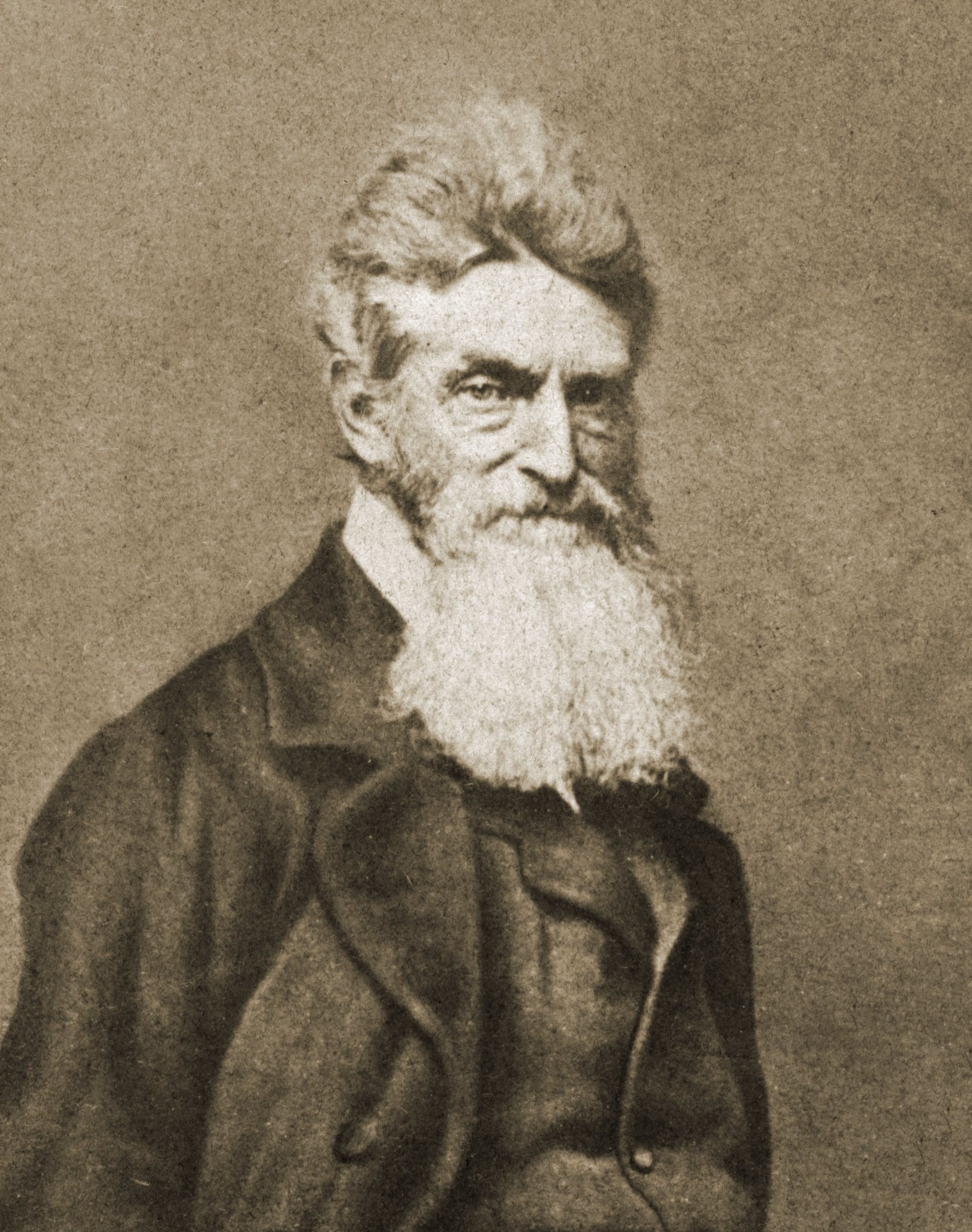
John brown, Abolitionist…freedom fighter or terrorist?
It took a while to sink in. Excited wasn’t the word…now it was time to explore everything I can about the man…loved by many and loathed by some.
John Brown the abolitionist, intent on freeing Black slaves through the early to mid 1800s, would eventually take to the gun and killing in order to achieve his aim.
He and a band of his men, some of whom were his sons, some were free Black slaves, and others were abolitionists willing to fight with Brown, were caught trying to raid the Harper’s Ferry armoury, the largest gun makers of the time.
They tried to hold out in the Harper’s Ferry fire station, a single-story brick building close to the town’s train station.
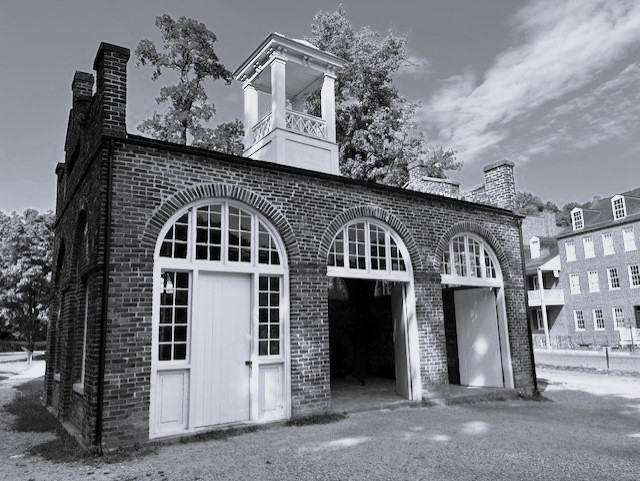
Where Brown and his men would hold out, known as John Brown’s Fort…the Harper’s Ferry fire station.
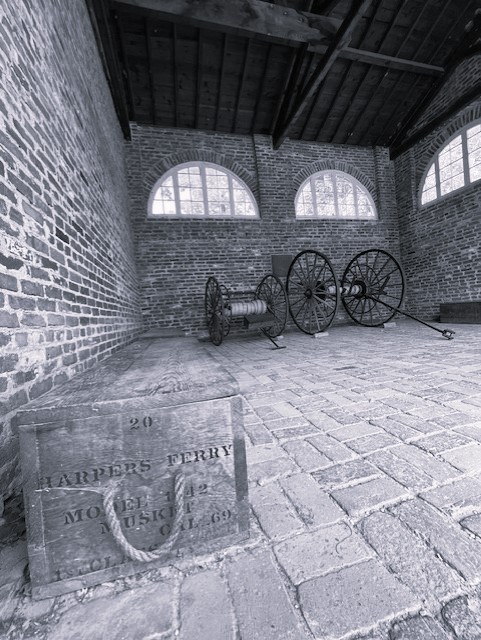
Inside John Brown’s Fort, even though bought, moved and re-erected many times, it still gives the feel of what it must have been like to be held up there fighting off an army.
At it’s height, 800 men commanded by Robert E Lee, at the time a junior officer, overpowered Brown and his men, killing and capturing most of them. Brown would be wounded in the siege.
Taken to a nearby town with a court, he would be tried and hanged in Charles Town.
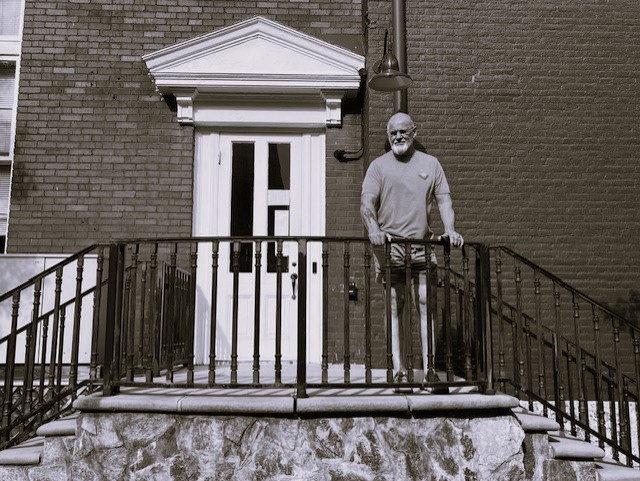
Standing outside of the same court doorway as John Brown did on his way to being hanged back in November 1859.
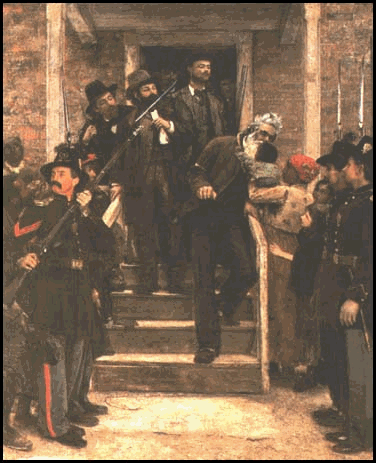
A painting of John Brown coming out from the same doorway, met by a Black mother with her child.
What made him become an abolitionist? Well his father was one, and he looked up to his father, an officer in the revolution against the British. And later in his life, he would meet a free Black slave called Dangerfield Newby. He would fight alongside John Brown at Harper’s Ferry. At 44 he would be the oldest fighter in Brown’s team apart from Brown himself, who was 59.
Dangerfield Newby had a wife and six children who were still slaves. He planned on buying them their freedom, but the Virginia slave owner would put up the price at the last minute. Newby was the first to die from Brown’s team. The local people of Harper’s Ferry dismembered his body. A note was found on his body written by his wife, pleading for him to set them free before they were sold on and lost forever.
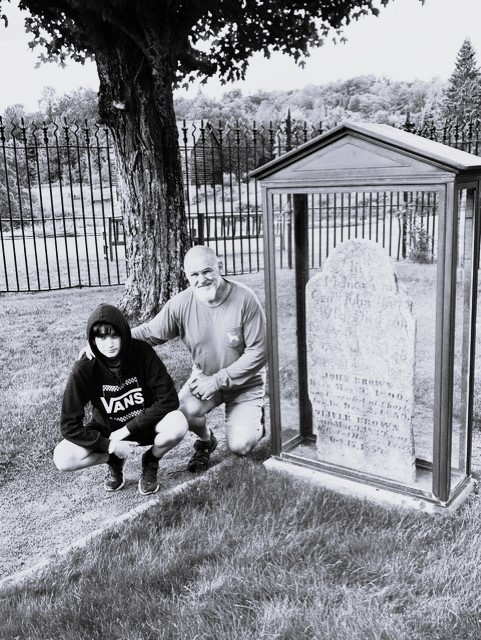
My daughter and I pictured at John Brown’s grave on his family farm at North Elba, NY.
My family and I travelled to John Brown’s grave in Upstate New York a few years ago, on his family’s farm, which is now a museum paid for through public funds.

Enjoying Upstate NY and it’s stunning scenery.
This time, the road trip involved some hiking in beautiful countryside, taking in Southern Ohio, Maryland and West Virginia. The bulk of the trip walking routes and driving scenic areas where Brown and his men way back then would have travelled and done their recces.

More stunning scenery of Southern Ohio on the way to Harper’s Ferry, WV.
Finishing in the town of Harper’s Ferry, famed today by visitors as one of the best-looking towns in America, and following the actions of the Civil War there.
Very few people who go there even know that John Brown fought his last battle to free slaves in that stunningly beautiful little town.
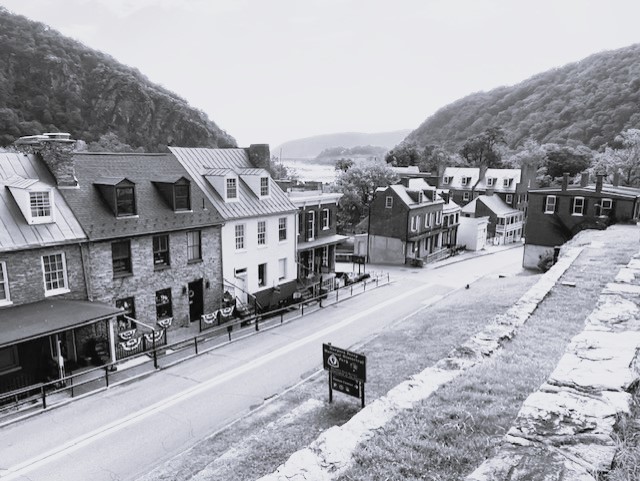
The town of Harper’s Ferry lies on a finger between two famous rivers. The Shenandoah River meets the Potomac River behind the bottom of this street. In the background you can see the Potomac moving it’s way through Maryland.
I’m home now, writing this post, and quite emotional.

The point at which I could feel energy.
Standing on a street in Charles Town, looking towards where my great uncle was hanged was a very strange experience…I felt energy there, something that happens a lot with me in other places, as I’ve blogged about before.
After all this time, was it the energy of John Brown?
 Bob Shepherd
Thank you Bob for all the work you’ve put into finding out about our history.
It is emotional, we’ve blood in the game.
Big thanks Elaine.